Showing posts with label LA Times. Show all posts

Thursday, June 19, 2014

Los Angeles Times: Assembly approves bill to increase reporting of on-campus incidents

UPDATE: This bill, AB 1433, passed the Senate Education committee yesterday. 

 
May 28, 2014 | Melanie Mason
Los Angeles Times


The Assembly unanimously approved a measure Wednesday that would require college officials to relay reports of certain on-campus incidents to local law enforcement.

The bill, by Assemblyman Mike Gatto (D-Los Angeles), comes at a time when universities across the country are under scrutiny for allegedly underreporting or not fully investigating sexual assaults and other such incidents occurring on campus.

"Campuses are not bubbles. They should not be treated that way," Gatto said on the Assembly floor. "We should make sure every crime that occurs on-campus is investigated with the same dignity and the same vigor as a crime that happens in our streets and in our homes."


Under the bill, when a victim reports a certain violent crime, such as a sexual assault or a hate crime, to campus officials, the college or university would have to immediately disclose that report to local law enforcement...


# # #
You can read this entire article and more by visiting LOS ANGELES TIMES here.
Mike Gatto is the Chairman of the Appropriations Committee in the California State Assembly.  He represents Burbank, Glendale, La Cañada Flintridge, La Crescenta, Montrose, and the Los Angeles neighborhoods of Atwater Village, East Hollywood, Franklin Hills, Hollywood Hills, Los Feliz, and Silver Lake.  www.asm.ca.gov/gatto

Monday, January 13, 2014

LA TIMES: New bill targets underreporting of sexual assaults at state colleges

Attorney Gloria Allred, left sitting and Dr. Caroline Heldman, professor of politics, along with 6 sexual assault victims at a news conference last April to announce the filing of a complaint against Occidental as a result of what the women allege is the college's "Deliberate indifference to rape victims." (Irfan Khan / Los Angeles Times / April 18, 2013)

SACRAMENTO -- A new bill introduced Monday would impose new reporting requirements for crimes occurring at colleges and universities, a response to reports that several California schools did not fully disclose on-campus sexual assaults.

The bill, by Assemblyman Mike Gatto (D-Los Angeles), would require colleges to report violent crimes and hate crimes on or near campus to local law enforcement for investigation, unless the victim of the crime requests that such a report not be submitted.

"Members of the public are tempted to think of universities as bubbles -- but they are not," said Gatto in an interview. "A crime that occurs there is just as harmful to society as a crime that occurs in someone’s backyard."

Gatto said his bill, AB 1433, was inspired by reports that a number of colleges in California, including Occidental College and USC, did not fully report crime statistics. Federal law requires colleges and universities to disclose to the U.S. Department of Education those statistics, which are then compiled into an annual report.

Gatto said his bill would improve on the federal law by getting the police involved when the crime is reported.

"What helps those victims is the crime actually being investigated by a competent law enforcement agency," he said. 

"Colleges and universities are there to teach. They're not there to investigate crimes," he added. "The police forces clearly are experts." 

Another bill introduced Monday seeks greater protections for sexual assault victims: AB 1460, by Assemblywoman Nora Campos (D-San Jose), would allow judges to grant restraining orders for victims of sex crimes, without first requiring the victim's testimony.

# # #

You can read this article and more at the Los Angeles Times

http://www.latimes.com/local/political/la-me-pc-college-sexual-assault-20140106,0,4727901.story#ixzz2qJypV4zi

Mike Gatto is the Chairman of the Appropriations Committee in the California State Assembly.  He represents Burbank, Glendale, La Cañada Flintridge, La Crescenta, Montrose, and the Los Angeles neighborhoods of Atwater Village, East Hollywood, Franklin Hills, Hollywood Hills, Los Feliz, and Silver Lake.  www.asm.ca.gov/gatto 

Tuesday, January 7, 2014

California lawmaker asks constituents to write America's first wiki-bill

Photo by Johann Dreo/Flickr

California lawmaker asks constituents to write America's first wiki-bill

By Aaron Sankin

Politicians always pledge to listen to their constituents when drafting new bills. Most of the time, these promises manifest themselves by nodding politely when voters lecture them at town halls and then introducing whatever legislation powerful corporate lobbyists write for them.

But one Golden State lawmaker is taking the idea of accountability to a new extreme. California Assemblyman Mike Gatto (D-Burbank) has introduced a Wikipedia-esque website where his constituents can literally work together to write a bill that he will then submit for passage.

Using Gatto’s online legislative wiki, users can add to or remove text from the bill in question. The changes can be made anonymously; however, there is a section where participants can identify themselves by name and add a short bio.

The fist bill under consideration using this system is aimed at reforming California’s inheritance laws, specifically with regard to passing on trust funds from one generation to another.

“This is the first purely crowd-sourced piece of legislation in the United States. We have advocated for using technology as a tool for citizen engagement,” Gatto told the Los Angeles Times, noting that he hoped the ability for anyone with Internet access work on the bill would prevent special interests from taking over. ‟We have the same checks and balances as Wikipedia itself. The whole idea is it’s designed to be self-policing.”

“We’ve encountered people in various settings who want to contribute to the process. They haven’t had as much access because they might not have a lobbyist,” Gatto spokesperson Justin Hager told the Glendale News-Press. ‟If you have ideas, we want to hear them and give people the power to make a difference.”

In a press release, Gatto explained that he selected this area of the law as the test case for his wiki legislation project because it strikes a balance between having a lot of experts like lawyers and CPAs who could contribute, but also could engender a good bit of interest from the general public since virtually everyone has had to deal with some legal issue relating to the death of a family member...

You can read this entire article and more at the Daily Dot HERE

# # # 


Mike Gatto is the Chairman of the Appropriations Committee in the California State Assembly.  He represents Burbank, Glendale, La Cañada Flintridge, La Crescenta, Montrose, and the Los Angeles neighborhoods of Atwater Village, East Hollywood, Franklin Hills, Hollywood Hills, Los Feliz, and Silver Lake.  www.asm.ca.gov/gatto 

Monday, October 7, 2013

LA Times: Lawmakers to offer new plan for TV and film production tax breaks

Dylan O'Brien rehearses in December 2012 a scene from the MTV series "Teen Wolf," which relocated from Georgia to Los Angeles to take advantage of a California tax credit. Two L.A. legislators will propose a new film and TV incentive package when the Legislature reconvenes in January. (Kirk McKoy / Los Angeles Times / December 10, 2012)
By Melanie Mason - October 4, 2013

SACRAMENTO --Two Los Angeles legislators announced this week they'll be pushing a new plan for tax breaks for film and TV production when the Legislature comes back to work in January.

California has had incentives for the entertainment industry since 2009, in an effort to fend off other states trying to lure film and TV shoots with generous tax breaks.

Gov. Jerry Brown signed the latest round of tax credits last year, which authorize $100 million in credits annually until July 1, 2017.

Assemblyman Mike Gatto (D-Los Angeles) said in an interview that his plan with state Sen. Kevin De León (D-Los Angeles) would be more than an extension of the current plan.

"I view this as a rather new product with different ideas," said Gatto, who serves on the California Film Commission, which allocates the tax credits.

Those new proposals include a tiering system that would give the maximum credit to productions that pay wages to California residents and incentives to build sound stages and post-production facilities.

Gatto said there would also be a credit for shoots that take place in under-utilized areas of the state, a provision that could address "the perception problem with the [current] credit that it’s purely for Southern California."

“Given the vulnerable state of our economy we can’t afford to hemorrhage any more good-paying jobs,” said De León in a statement. “First thing in 2014, we need to extend the film tax credit and improve it to maximize job retention and bolster this home-grown industry..."

...The entertainment industry last year originally sought a five-year extension of the credits, but ended up with two additional years.

And there's been much back-and-forth as to the economic benefit the credits have delivered. Studies by UCLA and the Los Angeles County Economic Development Corp. said the incentives have provided an economic boost; the state's Legislative Analyst's Office said the program caused a net loss in state revenues.

"If this was just an expansion -- a very inelegant, blunt direct expansion of the current credit -- I’d probably have a problem with that myself," Gatto said.

"The only reason why I feel comfortable doing this now is I believe it's possible to craft it in a way that really does maximize benefit to the community as a whole," he said.

You can read this article and more by visiting the Los Angeles Times HERE

 # # #

Mike Gatto is the Chairman of the Appropriations Committee in the California State Assembly.  He represents Burbank, Glendale, La Cañada Flintridge, La Crescenta, Montrose, and the Los Angeles neighborhoods of Atwater Village, East Hollywood, Franklin Hills, Hollywood Hills, Los Feliz, and Silver Lake.  www.asm.ca.gov/gatto

LA Times: Brown signs law amending state's anti-toxins law, Proposition 65

California Gov. Jerry Brown, center, signed a law giving businesses that are in violation of Proposition 65 two weeks to post the required notices before they are subject to lawsuits or steep fines. (Rich Pedroncelli, Associated Press / January 24, 2013)
By Melanie Mason - October 5, 2013

SACRAMENTO -- Gov. Jerry Brown on Saturday signed into law changes to Proposition 65, the state's landmark anti-toxins law, that aim to reduce lawsuits and fines for businesses.

The initiative, which voters approved in 1986, requires businesses to post notices about the presence of possibly dangerous chemicals, which include alcohol, carcinogens found in parking garages and byproducts of coffee roasting.

Some business owners, particularly owners of bars and coffee shops, complained the law had spawned a wave of frivolous lawsuits and excessive fines over improper signage.

The measure by Assemblyman Mike Gatto (D-Los Angeles) gives businesses that are in violation of the law two weeks to post the required notices before they are subject to lawsuits or steep fines.

Gatto said he was in a "state of disbelief" that his bill, AB 227, had become law, particularly because making changes to the initiative required two-thirds approval in the Legislature.

"Nobody has been able to do this since 1986," he said...

You can read this article and more by visiting the Los Angeles Times HERE

 # # #

Mike Gatto is the Chairman of the Appropriations Committee in the California State Assembly.  He represents Burbank, Glendale, La Cañada Flintridge, La Crescenta, Montrose, and the Los Angeles neighborhoods of Atwater Village, East Hollywood, Franklin Hills, Hollywood Hills, Los Feliz, and Silver Lake.  www.asm.ca.gov/gatto

Thursday, August 15, 2013

Making it easier to have a public dog park in California

Jennifer Zelinski does an elbow plank as her dog Wash looks around the Barrington Dog Park, where owners were working out with their pets in tow. (Los Angeles Times / July 10, 2013)
By Carla Hall
August 13, 2013, 6:03 p.m.

There are few urban spaces more fun to visit than a dog park, even if you don’t have a dog.

Dog parks are also essential for the cooped-up city dog without his or her own private field to romp through. And they’re usually a safe alternative to walking the dog. But, as with all publicly run spaces, there is the question of the municipality’s liability. And those kinds of concerns were stopping small and medium-size cities from opening dog parks.

Assemblyman Mike Gatto (D-Los Angeles), whose district covers Burbank, Glendale, the Hollywood Hills and Silver Lake among other communities, introduced AB 265, which limits the liability that cities and counties face when operating dog parks. He credits Glendale City Council member Laura Friedman with getting him launched on the bill after Friedman told him that one of Glendale's biggest concerns about opening a dog park was the liability. Gov. Jerry Brown (whose own dog, Sutter, has traveled the state) signed the bill into law Monday. The state has similarly imposed limited liability under some conditions for public skate parks.

Letting your canine run at the dog park generally isn’t as risky as skateboarding -- neither you nor your dog is likely to break any bones. But obviously, dogs sometimes do bite or attack people and other dogs. State law already holds dog owners liable for any injury or death caused by their dogs in a dog park. That will continue to be the case. But victims who can’t recover costs from dog owners theoretically could turn to the city or county for damages. The new law makes dog park operators not liable for an injury that results solely from an attack by a dog and is not in any way connected to the operation of the park.

This is a good and smart legal change that should help smaller communities throughout the state set up needed dog parks. And it’s another reminder that owners of dogs need to be careful with their pets no matter where they are. Everyone, human and canine, needs to be responsible in a dog park.

# # #

Mike Gatto is the Chairman of the Appropriations Committee in the California State Assembly.  He represents Burbank, Glendale, La Cañada Flintridge, La Crescenta, Montrose, and the Los Angeles neighborhoods of Atwater Village, East Hollywood, Franklin Hills, Hollywood Hills, Los Feliz, and Silver Lake.  www.asm.ca.gov/gatto

Tuesday, August 6, 2013

LA TIMES: L.A. council ends ticketing of drivers who park at broken meters

L.A. traffic officer Richard Garcia walks past the city's new, high-tech parking meters. The new meters are so reliable that the City Council has decided that drivers who park at broken meters won't be ticketed.
GLENN KOENIG, LOS ANGELES TIMES - July 31, 2013, 9:36 p.m.
BY LAURA J. NELSON - July 31, 2013, 9:39 p.m.

For the last three years, drivers who left their cars at broken parking meters in Los Angeles risked getting a ticket. It was an unpopular enforcement policy, but one that officials said was needed to scare off drivers who broke meters or wrapped them in bags to avoid paying to park.

But on Wednesday, the City Council unanimously agreed to reverse course, saying the policy is unnecessary because new, high-tech parking meters have made a dramatic difference in the equipment's reliability...

...When motorists were allowed to park for free at broken meters — and the devices accepted only coins — roughly 10% to 12% were broken at any time.

"Smart Meter" - Courtesy LA Times
But the 38,000 so-called "smart meters" Los Angeles has installed since 2010 immediately alert repairmen when coin slots jam or the new credit-card readers stop working. Officials say that feature, and the fact the new meters are harder to damage, has raised the city's meter operability rate to 99.9996%. Meters are repaired within a few hours, officials said.

"The meters have never worked better," Transportation Department engineer Dan Mitchell said at a recent meeting with city lawmakers.

The Transportation Department will report back to the City Council in six months on the effects of Wednesday's policy change, including whether vandalism increased...

...Even if the meter is broken, the department said, drivers can stay only as long as is posted — not indefinitely.

The council also voted 12 to 1 to recommend that Gov. Jerry Brown veto Assembly Bill 61, sponsored by Assemblyman Mike Gatto (D-Los Angeles), which would ban tickets at broken meters statewide. Councilman Paul Krekorian said regulating parking meter violations is a matter for local government.

Gatto criticized the council vote in a statement, saying " 'local control' does not provide a right to fleece taxpayers." Taxpayers already pay for street maintenance, meter installation and meter upkeep, he said. "Cities should take responsibility and keep parking meters in good working order, not squeeze a double-penalty out of cash-strapped citizens."

Newly seated Councilman Bob Blumenfeld cast the only vote against the veto request. He supported Gatto's bill as a member of the state Assembly.

laura.nelson@latimes.com

You can read more at http://touch.latimes.com/#section/-1/article/p2p-76870153/

# # #

Mike Gatto is the Chairman of the Appropriations Committee in the California State Assembly.  He represents Burbank, Glendale, La Cañada Flintridge, La Crescenta, Montrose, and the Los Angeles neighborhoods of Atwater Village, East Hollywood, Franklin Hills, Hollywood Hills, Los Feliz, and Silver Lake.  www.asm.ca.gov/gatto 

Wednesday, July 10, 2013

OPINION LA: L.A.'s broken-parking-meter scheme may soon expire

Excerpt from Patt Morrison's *great* column on local parking woes. Yes, Cool Hand Luke is one of my all-time faves... And yes, I've gone through my share of maddening little nuisances based on our less sensible laws.  So frustrating!

A Westwood man feeds one of the newfangled L.A. city parking meters, this one in downtown Los Angeles.
The meter also takes credit cards. (Patrick D. Fallon / For The Times / May 31, 2013)
By Patt Morrison
July 8, 2013, 12:04 p.m.
This post has been updated and corrected, as indicated below.

Remember the scene early on in “Cool Hand Luke” when Paul Newman whacks the heads off those parking meters?

I loved it. You did too -- admit it.

I don’t know whether that’s one of Mike Gatto’s favorite movies, but I hope so. He’s the Los Angeles Democratic assemblyman who wrote the bill that would smack down cities like L.A. that ticket people for parking at meters that turn out to be broken. L.A. sticks Angelenos with a $73 ticket.

It’s one of the city’s more cynical ways of making money, and Gatto wants it to stop. We already pay, as he points out, “for street maintenance, meter installation and meter upkeep.” Cities should spend their time and treasure keeping the meters working, “not squeez[ing] a double penalty out of cash-strapped citizens.”

(The bill has been passed by the Assembly and state Senate and sent to the governor.)

Did Mike Gatto ever get ticketed for parking at a broken meter? Was that the spark to the legislative fuse? I hope that’s true too.

I’ve parked at a meter, put in my money, found it broken and dutifully called the city to report it. What did the dame at the other end of the phone say to my good-deed-doing? “Move your car to another meter.” No refund, no credit, no thanks.

Although the city says its new generation of card-or-coin meters have been virtually trouble-free, about one in 10 of the old-style coin meters were broken at any given time. Many were vandalized, although less picturesquely than in “Cool Hand Luke.” The city, like the Napoleonic Code, assumes that we are all vandals, jamming the meters to save ourselves six bits. Thus, we cannot benefit from our crime by parking free at a broken meter.

Why did it take an assemblyman to try to fix this? Why didn’t some City Council member introduce a piece of city legislation to do this?

[Updated, 3:40 p.m. July 8: Newly elected Councilman Mike Bonin, who leads the council's Transportation Committee, offered a motion July 2 to rescind the penalty for parking at an inoperable meter.]

Follow the money; follow the coins. I bet you a roll of quarters that the city does not use that $73 fine to fix the parking meters. I bet you that the city puts that $73 fine into the general fund and goes merrily along, congratulating itself on what a crafty little cash cow it’s milking. Broken meters may very well make more money than working ones; how’s that for a slick deal?

Of course people can cheat the parking rules -- does that give the city permission to out-cheat them? Enforce fair rules fairly and people won’t have grounds to complain when they get dinged for breaking them.

The new meters that accept coins or credit cards are crowding out the coin-only meters. There are nearly 40,000 of them, and fewer than a dozen are broken at any one time. If this is not a problem that will fix itself, then maybe Gatto’s bill will...

[For the Record, 3:40 p.m. July 8: The original version of this post stated that one in 10 parking meters in the city were broken. The latest report from the city's Department of Transportation states that only 6 of the 37,000 card-or-coin meters now in service have been found inoperable since Jan. 13, for a total of 12.5 hours of down time. That statistic covers only meters that wouldn't accept both coins and cards; no statistics were available yet for meters that would accept one but not the other.]

You can read more at http://www.latimes.com/news/opinion/opinion-la/la-ol-broken-parking-meters-legislation-20130708,0,4222782.story

Mike Gatto is the Chairman of the Appropriations Committee in the California State Assembly.  He represents Burbank, Glendale, La Cañada Flintridge, La Crescenta, Montrose, and the Los Angeles neighborhoods of Atwater Village, East Hollywood, Franklin Hills, Hollywood Hills, Los Feliz, and Silver Lake.  www.asm.ca.gov/gatto 

Monday, April 15, 2013

LA Times Business Beat: Limiting Lawsuits


A restaurant owner was threatened with a lawsuit for not posting enough of these warning signs. (Stephen Osman / Los Angeles Times / December 12, 2005)
Limiting lawsuits
Brett Schoenhals thought he was following the law by putting one of California's all-too-familiar warnings in the bar of his Coffee Table restaurant in Eagle Rock.
Soon after he posted the sign, "This facility contains chemicals known to the state of California to cause cancer and birth defects or other reproductive harm," he got a letter from a lawyer saying he was representing an irate patron who wanted to see more warnings.
Invoking the Safe Drinking Water and Toxic Enforcement Act of 1986, or Proposition 65, the lawyer threatened a lawsuit. The restaurant owner was told he faced fines of $2,500 a day for violations.
Infuriated, the Coffee Table owner decided to fight. "I plastered my whole place with signs everywhere," he said.
Afterward, he confronted the lawyer, who dropped his complaint. But Schoenhals did not stop there. Convinced he and other business owners were too often being extorted, he took his frustrations to Assemblyman Mike Gatto (D-Los Angeles). The lawmaker introduced a bill to help businesses avoid fines for minor violations, if they promptly fix problems, and it is set to get its first legislative committee vote Tuesday.
"The voters passed Proposition 65 to be protected from chemicals that could hurt them," Gatto said. "They did not intend to create a situation where shakedowns of California's small business owners would cause them to want to close their doors."
You can read this article and more at the Los Angeles Times HERE
Mike Gatto is the Chairman of the Appropriations Committee of the California State Assembly.  He represents the cities of Burbank, Glendale, La Cañada-Flintridge, the Los Angeles neighborhoods of Los Feliz, Silver Lake, Atwater Village, and portions of the Hollywood Hills and East Hollywood.  www.asm.ca.gov/gatto 

Wednesday, February 20, 2013

LA Times Excerpt: Lawmaker wants to open Southland car pool lanes for off-peak use

Eastbound traffic on the 134 Freeway is clogged by an accident. (Mike Meadows / Associated Press / June 10, 2010)


By Patrick McGreevy
February 19, 2013, 10:51 a.m.


...Assemblyman Mike Gatto (D-Los Angeles) said his AB 405 will create a test program that could be expanded to other congested freeways in Southern California that do not open up car pool lanes to all traffic after rush hour. It would allow single-passenger vehicles to use the car pool lanes in off-peak hours in a five-mile stretch of the 134 between the 170 and 5 freeways...

You can read this entire article, and more at the LA Times by clicking HERE

Friday, February 8, 2013

Celebrating One Month of Homemade-Food Businesses in California - Caron Ory


A taste of home-kitchen-based business

Fountain Valley woman's class will help cottage food entrepreneurs digest state rules to get started.

January 21, 2013|By Jeremiah Dobruck, Los Angeles Times

Caron Ory has developed a sugar alternative called Eco-BeeCo
and she will teach a class at Orange Coast College
about how to develop and sell cottage-industry food products.
(Scott Smeltzer / Daily Pilot)
When Caron Ory's father was diagnosed with diabetes and struggled to stop eating sugar, the trained dietitian told him not to worry.

"I'll create something for you," she promised.

Through two years of research, trial-and-error recipes and taste tests, Ory came up with Eco-BeeCo, a natural sugar alternative with a tad of freeze-dried honey that passed her requirements nutritionally and her father's gustatory muster.


But when Ory wanted to share her product outside of family and friends, she ran into a hurdle.

To sell the product she'd developed in her home kitchen, California law required her to contract with a commercial kitchen to produce it.

Instead of building a small market and gradually making the transition to large-scale distribution, Ory had to invest $35,000 to blend 6,000 pounds of Eco-BeeCo without ever having sold a pouch of it.

"I spent thousands, and it was a big, big, big risk," she said. "I didn't even know my product was a big seller, and here I am blending 6,000 pounds."

But that hurdle recently disappeared.

Last fall, Gov. Jerry Brown signed Assembly Bill 1616, a law allowing Californians to make and sell certain non-hazardous foods out of their kitchens. Foods that don't include cream or meat, such as bread, fruit, baked goods, jarred goods and dry mixes — like Eco-BeeCo — could all bypass commercial production and be sold straight out of a home kitchen, according to the law.

When Ory learned that the relaxed requirements would start Jan. 1, she looked for a way she could help others get their products off the ground without making the upfront investment she had.

"Everybody has a signature recipe that they make and people rave about," Ory said.

So, on March 2, Ory, a Fountain Valley resident, will teach a class from 9 a.m. to 4 p.m. at Orange Coast College in Costa Mesa about AB 1616 and the business of starting a cottage industry out of a home kitchen.

She'll outline the new law and guide students through the basic business side of things, including product assessment, pricing and packaging.

After the class, students will still have to apply for a permit and take a basic food-handling course to get state approval. Ory hopes she can be a mentor to her students as they go through that process.

"With the state of California, it's kind of like a moving target right now because it's a new law," she said.


Friday, February 1, 2013

Celebrating One-Month of Homemade-Food Businesses in California

It’s been one month since AB 1616 -- the California Homemade Food Act -- took effect.  In recognition of this anniversary, I want to celebrate the success of home-based food businesses in California!

Throughout the next week, I will be highlighting home-based-food business here in California.  

Taken from news articles, web-blogs, and other sources from around the state, I hope these posts will help illuminate the impact of AB 1616, provide readers with additional resources on how to start their own homemade food business, and inspire new ideas of how to help local businesses in California even more.

Mark Stambler and his award-winning
homemade brick-oven bread
(Photo: Mel Melcon / Los Angeles Times)


Today, I'm highlighting the story of the inspiration behind AB 1616, Mark Stambler, whose award-winning homemade brick oven bread business was shut down by the Los Angeles Department of Environmental Health. Get the story "Behind the Bill" in this Assembly Access Video.

Thank you, best wishes, and good cooking!

Mike Gatto
Assemblyman, 43rd District


Mike Gatto is the Chairman of the Appropriations Committee of the California State Assembly.  He represents the cities of Burbank, Glendale, La Canada-Flintridge, La Crescenta, Montrose, the Los Angeles neighborhoods of Los Feliz, Silver Lake, Atwater Village, and portions of the Hollywood Hills and East Hollywood.   www.asm.ca.gov/gatto

Thursday, January 24, 2013

California bills target false 911 calls in 'swatting' cases

After a spate of phony reports of crimes at celebrities' homes, legislators from the Los Angeles area propose bills to increase penalties for making bogus reports to police.
LAPD officers on Arrowhead Drive in the Hollywood Hills, where they are investigating a hoax connected to a reported home¿invasion robbery call Wednesday at a Hollywood Hills residence owned by actor Ashton Kutcher. (Bob Chamberlin / Los Angeles Times / January 24, 2013)

SACRAMENTO — Alarmed that pranksters have called 911 to report false emergencies at the homes of celebrities including Justin Bieber and Tom Cruise, two Southern California legislators have proposed laws to get tougher with anyone engaged in "swatting."

A bill announced Wednesday by state Sen. Ted Lieu (D-Torrance) would allow longer sentences for and greater restitution from those convicted of making false reports to the police. Los Angeles County Sheriff Lee Baca asked for the measure.

A similar proposal has been introduced by Assemblyman Mike Gatto (D-Los Angeles)...

You can read this entire story and more at the Los Angeles Times, by clicking HERE

 Mike Gatto is the Chairman of the Appropriations Committee of the California State Assembly.  He represents the cities of Burbank, Glendale, La Canada-Flintridge, La Crescenta, Montrose, the Los Angeles neighborhoods of Los Feliz, Silver Lake, Atwater Village, and portions of the Hollywood Hills and East Hollywood.   www.asm.ca.gov/gatto  

Friday, January 18, 2013

Lowering emissions, raising red flags

The California Air Resources Board has implemented a regulatory program called the Low Carbon Fuel Standard that has the potential to promote clear-cutting of the Amazon Rain forest and starvation in developing countries due to the conversion of food into fuel.  The policy of turning food into fuel is a mistake that needs to be corrected, and some regulations, though well intended, need to be more carefully considered.  The Low Carbon Fuel Standard, and its consequences, are the subject of an Opinion Editorial I wrote that was published this morning in the LA Times.  Highlights are below and the complete editorial can be found at the LA Times website HERE.


Lowering emissions, raising red flags

The Low Carbon Fuel Standard was intended to reduce California carbon emissions, but it may come with some terrible unintended consequences.

The Low Carbon Fuel Standard, a regulatory program established under Gov. Arnold Schwarzenegger, 
was intended to reduce California carbon emissions, but it may come with unintended consequences. 
(Frederic J. Brown / AFP / Getty Images )


We've all seen the movie: Some small, seemingly unrelated actions lead to dire and unintended consequences. It happens in real life too, especially in government. The Low Carbon Fuel Standard, a regulatory program established under Gov. Arnold Schwarzenegger, was intended to reduce California carbon emissions, but it may come with some terrible unintended consequences.

The concept underpinning the standard is that most Californians would pay a little more at the pump if that guaranteed cleaner air. But what if the program also unwittingly supported the economy in places like Iraq, promoted clear-cutting of the Amazon rain forest, increased hunger in nations such as Haiti and Guatemala, and eliminated jobs in California? These are some of the unintended consequences if we don't change how the standard is implemented...

...The policy also requires California gasoline to be "improved" by adding ethanol. Alas, the highest-scoring and only cost-effective ethanol is sugar cane ethanol from Brazil. We would then have to ship Brazilian ethanol to California, using much fossil fuel. Environmentalists, including Jane Goodall, cite sugar cane production as the primary reason huge Brazilian corporations are clear-cutting pristine rain forest. We should not have to choose between clean air and massive deforestation...


...And what of California's economy? I want to see a petroleum-free world, like many others. My wife and I own one car, a 45-mpg hybrid, and I bicycle everywhere I can. But as long as Californians are still using gas to fill their tanks and to heat their homes, they should have some of the jobs in that industry. There are more than 200,000 such jobs in Southern California. These are well-paying jobs, and driving them overseas doesn't make sense...

Thursday, January 10, 2013

California taking orders for replicas of vintage license plates

Highlights from Patrick McGreevey's article in the Los Angeles Times:


...The styles available for use as official license plates on cars include black lettering over a yellow background as issued in the 1950s, yellow lettering over a black background last issued in the 1960s and yellow lettering over a blue background previously available in the 1970s, according to the DMV. 
The state is taking pre-orders for the $50 plates and will issue each of the three styles when it receives 7,500 applications for that style... 
...A pre-order form must be accompanied by a check, money order or cashier’s check and cannot be processed at DMV field offices or Auto Club offices. 
The program was proposed by Assemblyman Mike Gatto (D–Silver Lake) who introduced legislation authorizing it...

# # #

You can read this article and more at the LA Times by clicking HERE

Order your California Legacy License Plate HERE

Find out more about the Legacy License Plate program HERE

Mike Gatto is the Chairman of the Appropriations Committee of the California State Assembly.  He represents the cities of Burbank, Glendale, La Canada-Flintridge, La Crescenta, Montrose, the Los Angeles neighborhoods of Los Feliz, Silver Lake, Atwater Village, and portions of the Hollywood Hills and East Hollywood.   www.asm.ca.gov/gatto  

Friday, January 4, 2013

2013 California Laws: Sales taxes go up, long guns are barred in public


By Patrick Mc­Greevy | Dec. 31, 2012

SAC­RA­MENTO — In 2012, the governor and Le­gis­lature over­hauled Cali­for­nia’s pub­lic pen­sion and work­ers’ compensation systems. They made it il­legal to carry rifles openly in cit­ies. They al­lowed cer­tain il­leg­al im­mig­rants to ob­tain driver’s li­censes and qual­i­fy for state col­lege fin­an­cial aid.
Voters made laws, too, ap­prov­ing Gov. Jerry Brown’s tem­por­ary quarter-cent hike in the sales tax, among oth­er meas­ures, in a bid to help re­solve Cali­for­nia’s dire fisc­al situ­ation.

In all, more than 750 new laws take ef­fect Jan.1.

Con­tro­versy sur­roun­ded the bid to per­mit per­haps hun­dreds of thou­sands of young il­leg­al im­mig­rants to qual­i­fy for state driver’s li­censes. The new law ap­plies to those giv­en a work per­mit as part of an Obama ad­min­is­tra­tion pro­gram that sus­pends de­port­a­tion for many people who ar­rived il­leg­ally as chil­dren.

Also con­ten­tious was the Dream Act, ap­proved in 2011 but tak­ing ef­fect today, al­low­ing stu­dents in the coun­try il­leg­ally to re­ceive tax­pay­er-fin­anced aid to at­tend uni­versit­ies and col­leges. The Cali­for­nia Stu­dent Aid Com­mis­sion ex­pects about 20,000 people to ap­ply for such as­sist­ance,said ex­ec­ut­ive dir­ect­or Di­ana Fuentes-Michel.
The ban on openly car­ry­ing un­loaded rifles and shot­guns in pub­lic in urb­an areas was largely a re­sponse to gun own­ers tak­ing long guns in­to their neigh­bor­hood cof­fee shops and parks as a demon­stra­tion of their 2nd Amend­ment rights.

Gun own­ers said the ban would in­fringe on their right to carry arms. But it passed with the back­ing of LAPD Chief Charlie Beck and L.A. County Sher­iff Lee Baca.

The courts have been en­lis­ted in a dis­pute over a new law pro­hib­it­ing the prac­tice of “con­ver­sion ther­apy” on minors in an ef­fort to change their sexu­al ori­ent­a­tion from gay to straight. Judges have dis­agreed over its mer­its, but a fed­er­al ap­peals court has blocked the law from tak­ing ef­fect.

New pub­lic pen­sion rules are aimed at sav­ing the two largest re­tire­ment sys­tems $78 bil­lion over the next 30 years. Pub­lic em­ploy­ees hired after Jan. 1 will have to wait longer to re­tire — up to age 67 for max­im­um be­ne­fits for many work­ers — and there will be new lim­its on how much pay they can col­lect.

New laws take ef­fect in many oth­er areas as well:

Cars and drivers

Insurance: Drivers pulled over by police are permitted to show officers their proof of insurance on an electronic device, such as a smartphone.

Red-light cameras: New statewide guidelines prohibit use of the cameras primarily to raise revenue and make it easier for drivers to challenge tickets issued on evidence from the devices.

Texting: Drivers may dictate, send and listen to text-based communications as long as they use voice-command or other hands-free technology.

Toll lanes: Solo drivers of hybrid vehicles are exempted from toll charges in “high-occupancy toll,” or HOT, lanes on parts of I-15 in San Diego and I-680 in Alameda and Santa Clara counties.

Used cars: Buy Here Pay Here lots that offer their own financing must post fair-market values on their autos and provide 1,000-mile, 30-day warranties on vehicles they sell.
Read The Times series: Wheels of Fortune

Vanity plates: State lawmakers no longer get a discount on vanity license plates.

Education

Charter schools: School districts gain greater authority to close charter schools that fail to make sufficient academic progress.

College textbooks: A new website, to be developed in coming months, will give students free digital access to 50 textbooks for lower-division courses in the University of California, California State University and California Community College systems. Hard copies will cost $20.

Fees: California State University may not establish, adjust or reallocate student fees without the approval of student representatives, must justify any increase and may not raise fees after the first 90 days of the school year.

Tests: The Academic Performance Index, which has been based entirely on student test scores, is changed to give test scores no more than 60% of the scale and include other factors such as graduation rates.

Employers and workers

Religious garb: California employers may not shunt Sikh and Muslim employees to work areas out of public view for wearing clothing or hairstyles, such as turbans, hijabs or beards, because of their religious beliefs.

Retirement: The state will create a panel to study the feasibility of a government-run retirement plan for low-wage private-sector workers.

Workers’ compensation: Payments to employees permanently disabled in job-related accidents will increase by $740 million, and employers will receive a break on premiums.

Food and drink

Beer: Certain microbrews aged in wooden barrels that previously held spirits will be licensed, regulated and labeled as beer throughout California.

Home-cooked food: Californians may sell certain homemade foods and baked goods, including bread, fruit pies, jams and dried nuts, to stores, to restaurants and directly to consumers.


Healthcare

Abortion: A study program that allows non-surgical abortions by a limited number of nurse practitioners, certified nurse-midwives and physician assistants is extended for two years.

Birth control: Registered nurses are permitted to give hormonal contraceptives to women by order of a certified nurse-midwife, nurse practitioner or physician assistant in some clinical settings.

Hollywood

Babies: Parents must have a doctor’s permission before being granted an entertainment work permit for infants 1 month old or younger.

Child actors: Registered sex offenders are barred from representing minors working in the entertainment industry. Criminal background checks are required for managers, publicists, photographers and other adults who have unsupervised access to young performers.
Read Times coverage: Case dropped against casting director over sex crime disclosure

Film taxes: The state’s tax credits for films and television shows made in California are extended for two years, providing up to $200 million in breaks for the industry.

Props: Red tape is reduced for permits to use sawed-off shotguns as props in film and television productions.

The Internet

Crime: The Los Angeles County sheriff is required to help state authorities determine whether Internet-related crimes, including identity theft and child molestation, are a significant problem requiring new state laws.

Privacy: University officials and private employers are forbidden to ask students, workers or job applicants for their email passwords or those for social media accounts such as Twitter and Facebook.

Telephone service: State agencies are banned from regulating Internet phone service. This extends a current “hands-off” policy by the California Public Utilities Commission.


Landlords, tenants and homeowners

Foreclosures: A tenant renting a property that is in foreclosure may keep possession of it until the lease expires. Another law guarantees struggling homeowners a reliable point of contact at their lender, imposes civil penalties on fraudulently signed mortgage documents and bans foreclosures on borrowers who are in loan-modification proceedings.

Pets: Landlords are not permitted to require that tenants declaw their cats or cut vocal cords in their dogs.

Rent: California landlords may not require that rent be paid online.

Law enforcement

Child abuse: The list of people subject to criminal liability for failing to report suspected child abuse is expanded to include coaches at elementary and secondary schools, college employees who interact with minors, commercial computer technicians and those who process film, video or computer images.

Stadium violence: Sports arenas and stadiums must post contact information for security personnel that is visible from seating and parking areas, so help can be summoned quickly if violence occurs.

Underage killers: Inmates serving life in prison for murders they committed as juveniles may apply after 25 years for a reduction of their prison term.

Parks and Wildlife

Animal fighting: Maximum fines double from $5,000 to $10,000 for people convicted of causing bears, bulls and roosters to fight with other animals or with humans.

Conservation: The state Department of Fish and Game must provide greater emphasis on conservation. Its name is changed to the Department of Fish and Wildlife.

Hunting: Dogs may not be used to hunt bears and bobcats.

State parks: The parks department must create a plan for increasing private revenue to operate the sites. Californians may apply a portion of their state tax refund to the parks in exchange for an annual park pass.

Public Transit

Bullet train: Members of the governing board of California’s High-Speed Rail Authority must publicly identify any financial interest they have in board decisions and disqualify themselves from acting on those matters. Read Times coverage: Cities in bullet train’s path have mixed reactions

Veterans

Benefits: State benefits rescinded due to a military discharge based solely on sexual orientation are to be restored if the federal government reinstates eligibility.

License plates: Fees for personalized veterans’ license plates are increased to provide more money to the County Veterans Service Officer Fund, which aids veterans and their families in obtaining benefits and services.

Sport licenses: The cost of sports-fishing and hunting licenses is reduced for active military personnel recovering from injuries or illnesses.

Welfare

Food stamps: Reimbursements will be made to those in a federally funded food stamp program called CalFresh if funds are stolen from their electronic benefit card accounts.

# # #

You can read this article and more at the LA Times by clicking HERE

Mike Gatto is the Chairman of the Appropriations Committee of the California State Assembly.  He represents the cities of Burbank, Glendale, La Canada-Flintridge, La Crescenta, Montrose, the Los Angeles neighborhoods of Los Feliz, Silver Lake, Atwater Village, and portions of the Hollywood Hills and East Hollywood.   www.asm.ca.gov/gatto  


Tuesday, December 11, 2012

Jam on: California Homemade Food Act goes into effect in January


By Betty Hallock

December 10, 2012, 2:52 p.m.
As of Jan. 1, the California Homemade Food Act will go into effect, allowing people in Los Angeles to sell certain foods and baked goods they've made at home to stores, restaurants and directly to customers.

Among those people are Echo Park bread-baker-turned-activist Mark Stambler, who co-wrote the bill AB 1616, along with Assemblyman Mike Gatto (D-Silver Lake), that Gov. Jerry Brown signed into law in September. Stambler's business of selling bread to local businesses was shut down in 2011 by the Los Angeles County Health Department after a story about his bread was published in the Los Angeles Times.

"Hopefully I'll be selling bread in the same shops I’d been banned from selling to a year and a half ago," says Stambler, who has a wood-fired bread oven in his backyard. "I've been spending most of my time making sure this legislation goes through. But I’ve continued to bake, giving it to family and friends. I want to continue to sell it, I just love baking bread."

Now the L.A. County Health Department is preparing to implement the law that allows aspiring food entrepreneurs to sell products such as breads, cookies, cakes, pies, jams, candy, granola, baking mixes, coffee, tea, honey, dried fruit and nuts, and other goods that don't include cream or meat -- without investing in a commercial kitchen or jumping through zoning compliance and other regulatory hoops.

The legislation still requires home producers to complete a food processor course, label products and, depending on where they're selling, undergo inspections and registrations with the health department.

Supporters say the new law will create a lucrative cottage food industry and help give residents of California an alternative source of income. California joins at least 30 states that have laws that allow the sales of homemade goods.

# # #

You can read this article and more at the LA Times by clicking HERE

Mike Gatto is the Chairman of the Appropriations Committee of the California State Assembly.  He represents the cities of Burbank, Glendale, La Canada-Flintridge, La Crescenta, Montrose, the Los Angeles neighborhoods of Los Feliz, Silver Lake, Atwater Village, and portions of the Hollywood Hills and East Hollywood.   www.asm.ca.gov/gatto 

Thursday, October 4, 2012

California DMV stands to make some money issuing vintage plates


October 4, 2012 |  8:51 am

For an extra $50, California car enthusiasts will soon be able to order vintage license plates, including the black plates with yellow lettering issued by the Department of Motor Vehicles in the 1960s, thanks to action taken by Gov. Jerry Brown.

Among the hundreds of bills signed by the governor last week, AB 1658 is aimed at Californians who restore and drive vintage automobiles, as well as residents who are just nostalgic for the good old days.
Other plates to be offered after Jan. 1 include those used in the 1950s, with a yellow background and black lettering, and those issued in the 1980s, with a blue background and yellow lettering.

The DMV will only produce one of the designs once 7,500 applications have been received for that design statewide. The cost of producing the plates would be covered by the money raised If the minimum number of each of the three designs are sold. State officials hope additional plates are ordered to bring money to the financially struggling DMV.

"AB 1658 will enable the backyard auto restorer, the nostalgic, or the owner of a brand-new retro-styled automobile to choose a license plate that best matches the look of their car while making a little money for the state too," said Assemblyman Mike Gatto (D-Silver Lake), who introduced the bill.


-- Patrick McGreevy in Sacramento
Photo: California next year will offer vintage license plates, like the one shown on this Thunderbird. Credit: Don Kelsen / Los Angeles Times

You can read this article and more at the LA Times by clicking HERE

# # #


Mike Gatto is the Chairman of the Appropriations Committee of the California State Assembly.  He represents the cities of Burbank, Glendale, and the Los Angeles neighborhoods of Los Feliz and Silver Lake.  E-mail Mike at: assemblymember.gatto@assembly.ca.gov, or call (818) 558-3043.

Website of Assemblyman Mike Gatto: www.asm.ca.gov/gatto


Friday, September 21, 2012

Gov. Jerry Brown legalizes sale of home-cooked food in California


September 21, 2012 | Gov. Jerry Brown on Friday signed a raft of bills aimed at improving the business climate in California, including one legalizing a growing cottage industry that sells home-cooked foods.

Assemblyman Mike Gatto (D-Silver Lake) wrote the bill making it legal to sell certain safe foods, including bread, cookies and tortillas, made in home kitchens. Until now, state law did not allow the sale of goods prepared anyplace but a commercial kitchen, although there was an exception for charity bake sales.

Under AB 1616, the state Department of Public Health would have authority to add and remove foods from a list of those approved for sale, and require the foods to be properly labeled. Foods with potential safety issues, including meats and custards, are not allowed under the bill.

"It will allow people who are trying to start a small business in a tough economy to do so with a minimum of red tape,'' Gatto said.

The governor also signed bills to make it easier for courts to dismiss vexatious lawsuits against businesses, give hotels longer to install carbon monoxide sensors and encourage the builders of a bullet train to buy rail cars made in California.

Brown vetoed SB 977 by Sen. Leland Yee (D-San Francisco), a measure that would have increased penalties for manufacturers of nail polish that falsely advertise their product as toxin-free.

"While bad actors should be punished, it makes no sense to increase penalties, one manufacturer at a time," Brown wrote in his veto message. "The existing Sherman Food, Drug, and Cosmetic Law provides for a $1,000 fine for a first offense, and a $10,000 fine for subsequent offenses, for false labeling of this kind. This suffices.’’

Read this article and more at the LA Times HERE


Mike Gatto is the Chairman of the Appropriations Committee of the California State Assembly.  He represents the cities of Burbank, Glendale, and the Los Angeles neighborhoods of Los Feliz and Silver Lake.  E-mail Mike at: assemblymember.gatto@assembly.ca.gov, or call (818) 558-3043.

Website of Assemblyman Mike Gatto: www.asm.ca.gov/gatto

Thursday, August 16, 2012

Gov. Jerry Brown Weighs Protections for California Sports Fans


Photo: Dodgers fan Eric Amend expresses his thoughts while attending a prayer vigil for Bryan Stow outside the USC Medical Center last year. Credit: Mariah Tauger/ Los Angeles Times

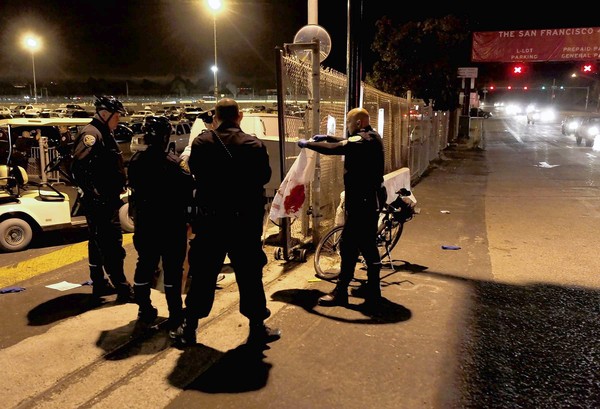
August 15, 2012 | Gov. Jerry Brown is weighing a proposal to better protect sports fans from violence at California's professional football stadiums, hockey arenas and baseball parks.

In the wake of violent incidents across the state, including the 2011 beating of San Francisco Giants fan Bryan Stow at Dodger Stadium, the Legislature this week sent Brown a bill that would require major-league sports venues to clearly post phone numbers that fans can call or text to quickly summon stadium security for help.

In addition to the Stow beating, which left him seriously injured, the measure was drafted by Assemblyman Mike Gatto (D-Silver Lake) in reaction to incidents last year at a San Francisco 49ers-Oakland Raiders game in which two people were shot in the parking lot and a fan was beaten unconscious in a stadium bathroom.

Gatto's original proposal would have required creation of a registry of people who would be banned from professional sports arenas because of their involvement in violence, and included longer sentences for sports hooligans.

The registry idea was dropped when it ran into opposition from civil liberties groups including the ACLU. The bill sent to the governor this week would instead require signs showing the security phone numbers to be posted where spectators can see them from their seats and in parking lots.

"Many parents have told me that they are afraid to take their kids to a ballgame," Gatto said. "This law will allow fans to report incidents to stadium security before they escalate out of control."

You can read this article and more in the Los Angeles Times HERE

# # #

Mike Gatto is the Chairman of the Appropriations Committee of the California State Assembly.  He represents Los Feliz, Silver Lake, and portions of Atwater Village along with the cities of Burbank and Glendale.  His web site is asm.ca.gov/gatto or e-mail Mike at: assemblymember.gatto@assembly.ca.gov, or call him at (818) 558-3043.